Interview with Robbie Hutton, Scottish EDM vocalist, songwriter and founder of Vocal Hut
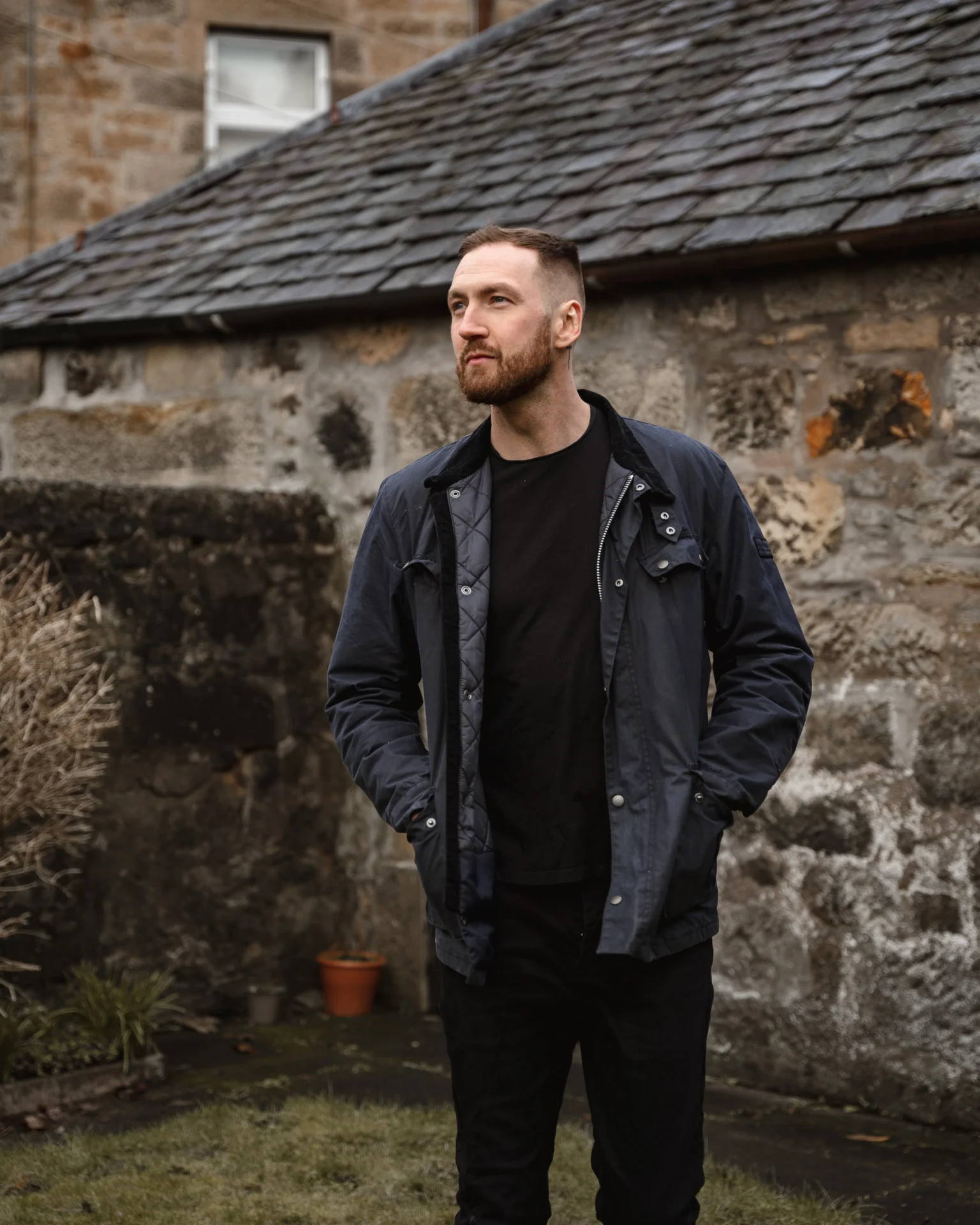
The Voice Behind the Drop: Robbie Hutton on Writing EDM Vocals, Finding Emotion and Building Vocal Hut
An exclusive interview with Scottish EDM vocalist, songwriter and Vocal Hut founder Robbie Hutton.
Try free EDM vocal samples: https://vocalhut.com/pages/free-edm-vocals
What makes an electronic music track unforgettable? Is it the production, the drop, the melody, or the voice that brings everything together?
For Scottish singer-songwriter Robbie Hutton, a great vocal can transform an instrumental into something listeners connect with on a completely different level.
Having spent years collaborating with electronic music producers worldwide, Robbie has developed a career spanning multiple EDM/Pop genres, with his vocals appearing on
tracks supported by internationally recognised DJs.
He’s also the founder of Vocal Hut, a platform offering original, professionally recorded, 100% human vocals for music producers.
We caught up with Robbie to explore the creative process behind his vocal toplines, what producers can do to make their music stand out, and why the human voice remains such a powerful part of electronic music.
Robbie, you’ve gone from performing in bands to having your voice featured on electronic music releases around the world. How did that journey begin?
I’ve been singing, writing songs and performing since I was about 12 or 13 years old.
Over the years, I’ve experimented with quite a few different genres, including heavy metal, pop punk and indie pop. My first band was actually a heavy metal band, believe it or not!
Before COVID, I was fronting an indie pop band with two guys I’d known since primary school.
When the pandemic arrived and live music came to a standstill, I knew I wanted to keep writing and recording somehow.
That’s when I started connecting with electronic music producers online who were looking for vocalists.
Initially, I was doing collaborations purely for the enjoyment of it, often working on royalty splits rather than upfront payments.
But as more releases started coming out, I realised just how much I loved writing for electronic music.
Eventually, that became my main focus, and I haven’t really looked back since!
You’ve written vocals for everything from progressive house to melodic and deep house. What makes a vocal hook genuinely memorable, and how do you approach writing one?
For me, it’s actually quite simple. Does it stick in your head?
If you find yourself subconsciously humming or singing a melody while doing everyday things, like walking the dog or making your dinner, then you know you’ve probably got a hook worth keeping!
I’ve been writing songs for many years now, and I’ve developed a bit of an instinct for when a melody is finally complete. It’s almost like putting the very last piece into a jigsaw puzzle. Everything suddenly falls into place, and you just know!
Sometimes that can happen almost instantly, and the song practically writes itself. Other times, you might spend hours working on a melody, and sometimes the best thing you can do is step away from it and come back with fresh ears.
My approach is to keep chipping away until I genuinely feel, deep down, that I couldn’t make the melody any better. I think that instinct develops naturally with years of practice and experience.
I also use reference tracks quite regularly, particularly because I write across so many different EDM genres. Every genre has its own characteristics, so listening to what’s working within a particular style can really help point me in the right direction.
Ultimately, though, if a melody keeps playing in your head long after you’ve stopped working on it, that’s usually a pretty good sign you’ve written something special!
A lot of EDM producers are fantastic at creating instrumentals but struggle with songwriting. Where do your own ideas usually come from, and how do you turn a simple melody into a complete topline?
I don’t really have one fixed songwriting method, which I think is actually a good thing because it keeps the process interesting.
Sometimes I’ll be listening to an EDM playlist and something about the music will spark an idea. It could be the atmosphere, the chord progression or simply the emotion behind a track.
Other times, I’ll be out walking and a melody or lyric will suddenly pop into my head.
Whenever that happens, I’ll grab my phone and record a quick voice memo before I forget it!
I’ve got countless little recordings saved on my phone. Some are only a few seconds long, while others contain almost an entire song.
Then, when I get back to the studio, I’ll sit at my Roland JUNO-Di and start developing the idea into something more substantial, to really get the creative process flowing.
I also have days where I sit down without any particular idea in mind and simply see what comes out.
For me, songwriting is a very instinctive process. I try not to overthink it too much because sometimes the most natural ideas turn out to be the strongest.
When you’re writing for electronic music, how much attention do you pay to the instrumental’s energy, BPM and key? Do you approach a melodic house vocal differently from something intended for a big festival drop?
100%! I think it’s incredibly important to get a proper feel for the instrumental before you start writing anything.
One thing I’ve learned over the years is to pay particular attention to the very first ideas that come into my head when I hear a producer’s instrumental for the first time.
Believe it or not, around 80–90% of the time, that initial melody, whether it’s a verse, chorus or just a catchy little vocal hook, ends up becoming the foundation of the finished topline.
I don’t really know why, but that’s just how my songwriting brain seems to work!
Of course, that doesn’t mean I keep everything exactly as it first comes out. I’ll always experiment, tweak the melody and refine the lyrics until I get that instinctive feeling I mentioned earlier, where everything finally falls into place and I genuinely feel the song is complete.
But I definitely trust those initial creative instincts. There’s often something quite special about that first emotional reaction to a piece of music.
And when it comes to different EDM genres, I think it’s essential to understand the overall mood and energy of the instrumental.
If I’m writing something emotional about heartbreak, for example, the lyrics and melody need to reflect that feeling. But if it’s a high-energy track designed to get thousands of people moving at a festival, then naturally, the vocal needs to complement that completely different atmosphere.
For me, the lyrics, melody and instrumental all need to work hand in hand. They should complement each other rather than compete with one another.
When you get that balance right, everything comes together to create one complete piece of music, and that’s where the magic happens!
From a vocalist’s perspective, what separates an average EDM track from one that genuinely connects with listeners emotionally?
For me, the biggest question is: can the listener actually feel what you’re trying to express?
I think that’s one of the reasons why human songwriting will always have something special that AI, no matter how advanced it becomes, will struggle to replicate.
AI-generated vocals might continue to sound more and more convincing, but personally, I still feel there’s something missing when it comes to the actual songwriting and emotional connection.
I genuinely believe that human beings have a natural instinct for recognising real emotion. Our emotional radar isn’t stupid!
So, if you’re writing a song and you really want to connect with the listener, my advice would be to be honest.
Write about things people can relate to. Dig deep into your own emotional closet, whether that’s heartbreak, love, happiness, regret or whatever else you’ve experienced in life, and don’t be afraid to express those feelings through your music.
And then, of course, there’s something else I’m absolutely obsessed with: hooks!
I love a good hook. In fact, I think every great song should have at least one or two
moments that stay with the listener long after the music has stopped.You know when you’re walking down the street, making dinner or just going about your day, and suddenly you find yourself humming a melody without even realising it?
That’s exactly what I’m talking about!
If you can create even one of those moments in a song, you’re onto something special. If you manage to create two or three, even better!
Ultimately, I think the best EDM tracks combine something that people can genuinely relate to with a melody they simply can’t get out of their heads.
So, if I had to sum up what separates an average EDM track from one that really connects with people, I’d narrow it down to three words: Relatability, emotion and hooks.
You’ve spent years recording and producing your own vocals. What’s one piece of advice you’d give producers who want their vocals to sound bigger, clearer and more professional?
One thing I’ve always believed is that the vocal should have its own space in the production.
Obviously, electronic music is built around some incredibly powerful sounds, whether that’s huge synths, basslines or drums.
But when you’ve got a vocal-led track, I think it’s important that all those elements work together rather than compete with each other.
As a vocalist, my ears naturally gravitate towards the singing first, so I notice pretty quickly when a vocal is getting lost in the mix!
I’d encourage producers to pay attention to how the instrumental interacts with the vocal, particularly in the frequencies where intelligibility and presence are most important.
EQ, compression and subtle saturation can all help, and I’m a big fan of using reverb and delay creatively to add atmosphere without washing everything out.
I also love Slate Digital’s Fresh Air for adding a little extra brightness and presence.
But ultimately, I think the most important thing is to make sure the emotion of the performance isn’t lost underneath the production.
You can have an absolutely incredible instrumental, but if the vocal is struggling to be heard, you’re potentially missing one of the strongest elements of the entire song.
Let’s talk about Vocal Hut. What inspired you to turn your catalogue of original vocal toplines into a platform where producers could purchase and use them in their own music?
Vocal Hut really came about quite naturally.
After spending several years writing and recording vocals for different producers, I’d accumulated a pretty substantial collection of original songs and toplines.
And I started thinking, rather than having all these recordings sitting on my hard drive, why not make them available to producers who might be looking for exactly that kind of material?
That’s when I decided to create Vocal Hut.
The idea was to give producers access to professional, ready-to-use vocals without necessarily having to go through the whole process of finding a vocalist, arranging recording sessions and waiting for a custom song to be written.
Every vocal on the website is written, recorded, performed and professionally produced by me (Robbie Hutton).
I also wanted producers to have plenty of creative freedom, which is why the vocal packages include dry and wet stems, along with supporting files such as lyrics and piano MIDI.
The name itself actually comes from my surname, Hutton. I took the first three letters, added ‘Vocal’, and Vocal Hut was born!
It was one of those names that just felt right immediately.
For a producer who has never worked with a professional vocal before, what’s your advice for building an entire track around an existing topline rather than writing the instrumental first?
Oh, that’s actually a really good question!
To be honest, I’ve never personally had to build an entire instrumental around a completely finished vocal topline.
I do have some vocals on Vocal Hut where I’ve included in the vocal packs the full instrumental stems that I’ve produced myself from the ground up, but when I’m producing the song as well, I tend to develop the instrumental and the vocals together as I go along.
However, if I were approaching a finished topline for the first time, I think my advice would be pretty simple: listen to the entire vocal a few times and see which part inspires you the most.
It might be the chorus, the verse, the intro or even just one particular melody that suddenly sparks an idea.
And the moment something comes into your head, get it down!
Don’t feel like you have to start at the beginning of the song and work your way through to the end.
If the chorus inspires you first, start there. If you hear an amazing idea for the drop, work on that instead!
I think one of the most important things to remember about music production is that there really are no rules when it comes to creativity.
You don’t have to follow some rigid process where you finish the intro, then the verse, then the chorus and so on.
Let your creativity bounce around. Follow whatever your musical instincts are telling you at that particular moment.
Sometimes an idea for one section can inspire something completely different elsewhere in the track, and before you know it, the whole arrangement starts coming together.
So, if it were me, I’d listen to the topline a few times, identify whatever part gives me that initial spark of inspiration, and just go with the flow from there.
Trust your instincts, follow the inspiration and don’t be afraid to experiment with your ideas – that goes for sounds too!
With technology and AI changing music production so quickly, what do you believe makes a real human vocal performance irreplaceable?
I think the human element is what gives music so much of its character.
When somebody sings a song, they’re bringing their own experiences, emotions and personality into that performance.
Even the little imperfections can contribute to what makes a recording special.
I’ve always believed that music is about connecting with people, and the voice is one of the most direct ways of doing that.
Technology can be absolutely incredible, and there are plenty of tools that make our lives easier as musicians and producers.
But personally, I think there’s something very special about knowing that the voice you’re hearing belongs to a real person who actually wrote and performed those words.
That’s one of the reasons I’ve made such a point of keeping Vocal Hut entirely human.
Every vocal is written and sung by me, with no AI-generated performances.
I think transparency is incredibly important, particularly as the industry continues to evolve.
Finally, for producers reading this who want to take their music to the next level, what’s the most important advice you’d give them, and how can they get started with Vocal Hut?
Well, firstly, I might be slightly biased here because I’m a vocalist, but I genuinely believe I’d feel exactly the same way if I were purely a music producer: don’t use AI
vocals!Personally, the moment I hear an AI-generated vocal on a track, which I can still usually recognise within the first few seconds, the whole thing loses a lot of its value to me.
The instrumental could be absolutely incredible, but as soon as I hear an AI vocal, my opinion of the overall track changes dramatically.
That’s just my personal perspective, of course, but I think if you’re serious about taking your music to the next level, you should surround yourself with experienced people who have a proven track record of releasing quality music.
Work with talented singers, songwriters, producers and engineers. Learn from people who have spent years developing their craft, and don’t be afraid to invest in quality.
And perhaps most importantly, work at it every single day!
Personally, I’m in the studio pretty much all the time. Apart from the occasional coffee with a friend or spending time looking after my daughter, you’ll usually find me working on music.
Weekends, weekdays, it doesn’t really matter. I’ll happily spend hours in the studio because I genuinely love what I do.
There are so many people out there trying to make a career in music, and I believe that if you want to give yourself a real chance of succeeding, you need to be willing to put in the work that separates you from the crowd.
Aim to be among the top 5–10% of people in terms of dedication, consistency and effort. You can’t control every opportunity that comes your way, but you can certainly control how much work you put into improving your craft.
Now, as for getting started with Vocal Hut, there are a few different options depending on what you’re looking for!
Non-Exclusive Vocals
I’ve got over 145 royalty-free non-exclusive vocals available on Vocal Hut, all professionally recorded and ready for producers to use in their own music.And yes, that’s quite a lot to choose from, haha!
Thankfully, I’ve made things easier by including BPM and key filters, so if you’ve already got an instrumental ready, you can quickly find vocals that fit your project.
Alternatively, if you’re starting from scratch, there’s a huge selection of complete toplines to inspire your next production.
They’re also incredibly affordable considering the quality and amount of material you’re getting, and you can even spread the cost over four payments using Klarna, subject to eligibility.
Exclusive Vocals
I also have a collection of exclusive vocals available, generally with 15 or more to choose from at any given time.These are a little more expensive, but the difference is that when you purchase an exclusive vocal, it’s sold only once.
That means no other producer can come along and purchase that same vocal recording after you’ve secured it.
For producers who want something unique for their next release, it’s a fantastic option, and I still try to keep the prices as affordable as possible.
Vocal Bundles
Then there are my vocal bundles, which are another option I’m particularly fond of!I’ve taken some of my favourite toplines and grouped them into themed collections, including the Spiritual Vocal Bundle, Heartbreak Vocal Bundle and Emotional Vocal Bundle.
Each bundle contains three complete royalty-free vocal toplines, so you’re getting three songs to work with for a price that’s only slightly higher than purchasing a single non-exclusive vocal.
And don’t just take my word for the quality of everything!
You can check out the customer reviews on Vocal Hut. The overall rating is around 4.99 out of 5.
Somebody actually gave me four stars a few months ago, and I’ve still not quite recovered from it!
Haha, I’m joking, of course!
But seriously, I’m incredibly grateful to everyone who’s supported Vocal Hut, and I put a tremendous amount of care into making sure producers receive genuine value for their money.
And if you’re not quite ready to purchase anything, you can even try before you buy!
I’ve created a dedicated Free EDM Vocals page, where producers can access three complete, royalty-free vocal toplines absolutely free.
These aren’t just little snippets or short samples. They’re full-length vocals that you can use to create and monetise your own music, subject to the included licence terms.
It’s a great way to experience the quality of my vocals firsthand before deciding whether you’d like to explore the rest of the catalogue.
And if you ever have any questions, you can contact me directly HERE. I personally respond to enquiries and always aim to get back to people within 12 hours.
Ultimately, my goal with Vocal Hut has always been simple: to give music producers access to professional, affordable vocals that offer genuine value for money.
Everything is 100% human-written, human-sung and human-produced, and that’s something I’m committed to keeping at the heart of Vocal Hut.
Thanks so much for having me!
ABOUT ROBBIE HUTTON AND VOCAL HUT

Robbie Hutton is a Scottish EDM vocalist, songwriter and founder of Vocal Hut, an independent platform offering professionally recorded, royalty-free male vocal toplines for
electronic music producers.
With exclusive and non-exclusive vocals available across multiple electronic music genres, Vocal Hut provides producers with original, 100% human-written and performed vocal recordings.
Explore Vocal Hut: https://vocalhut.com
Try free EDM vocal samples: https://vocalhut.com/pages/free-edm-vocals
All vocal downloads are subject to their respective licensing terms.