CREATOR STORIES: Interview with Sophia Sigma
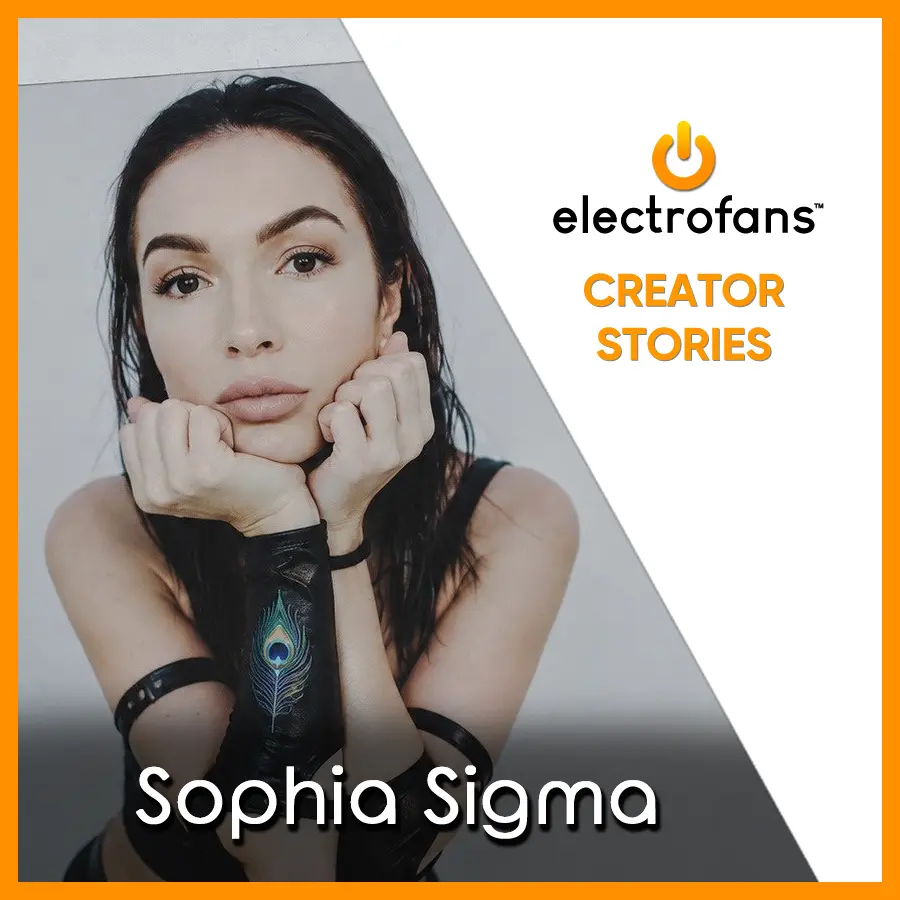
Hi Sophia! First question for you: what is the story behind your artist name, “Sophia Sigma?”
There is actually a very personal story behind the name. Sophia is my first name, and Sigma came from an archetype test I did with a friend a while ago. We were talking about different archetypes and decided to take the test just out of curiosity. My result came out as the Sigma archetype.
My friend immediately said, “That should be your stage name.” I laughed at first, but the more I thought about it, the more it made sense.
The Sigma woman archetype is generally associated with independence, self direction, confidence, individuality and not needing to follow the conventional path. She is comfortable creating her own direction rather than looking for approval or trying to fit into a hierarchy.
That really resonated with me, especially as an artist. I have always wanted to do things in my own way and create something that feels authentic to me rather than trying to fit into a particular category. So Sophia Sigma became the name, and over time it has become much more than just a stage name. It represents a certain mindset and the artistic world I am building.
There is actually a very personal story behind the name. Sophia is my first name, and Sigma came from an archetype test I did with a friend a while ago. We were talking about different archetypes and decided to take the test just out of curiosity. My result came out as the Sigma archetype.
My friend immediately said, “That should be your stage name.” I laughed at first, but the more I thought about it, the more it made sense.
The Sigma woman archetype is generally associated with independence, self direction, confidence, individuality and not needing to follow the conventional path. She is comfortable creating her own direction rather than looking for approval or trying to fit into a hierarchy.
That really resonated with me, especially as an artist. I have always wanted to do things in my own way and create something that feels authentic to me rather than trying to fit into a particular category. So Sophia Sigma became the name, and over time it has become much more than just a stage name. It represents a certain mindset and the artistic world I am building.
 |
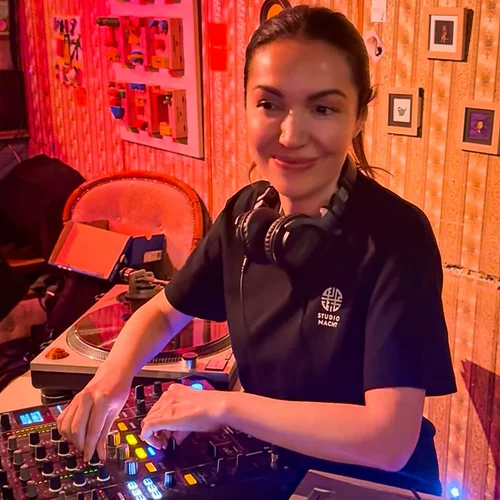 |
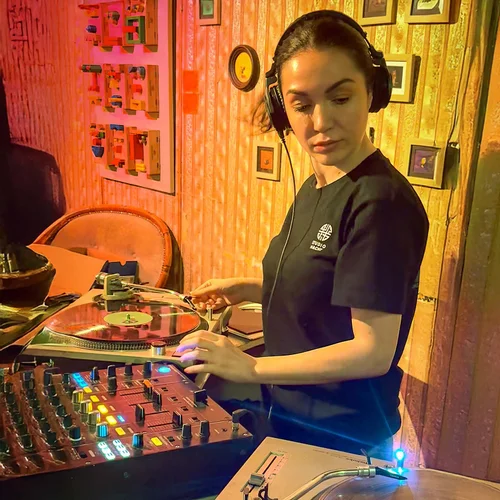
Speaking of DJs and DJing, you recently played at an all vinyl night at Amsterdam Vinyl Club. How was that? What do you think are some of the differences or perhaps unique challenges with DJing a vinyl set, versus using a CDJ or simple USB?
The Amsterdam Vinyl Club night was a really special experience. There is something very different about playing vinyl because you are much more physically connected to the music. You are choosing the record, handling it, putting the needle on, working with the pitch and the mixer, and really listening to what is happening.
With vinyl, you also have to commit to your decisions. You cannot simply scroll through thousands of tracks and immediately find another option. You need to know your records and understand their structure. Technically, there is also less room for correction, so you have to be much more attentive.
But I actually enjoy those limitations. They force you to listen differently and to be more present. There is also something very emotional about holding the physical record and knowing the history behind it.
At the same time, whether I am playing vinyl or digital, my philosophy is similar. I don’t want to treat a DJ set like a playlist. I want to build a journey, give tracks space and respond to the energy of the room.
What have been some of the favorite shows you have played at as a DJ? What made them so special or memorable?
One of my favorite sets was at ADE in 2023. It was my first ADE as a DJ, and I played a four hour set, so I had the opportunity to really take the audience on a journey rather than trying to fit everything into a short set.
Four hours gives you a completely different kind of freedom. You can build the energy slowly, explore different moods and take the music in directions that you might not have the opportunity to explore in a one hour set. I could really connect with the crowd and let the night develop naturally.
It was also special simply because it was my first ADE as a DJ. ADE is such an important moment in the electronic music world, and being there not just as an attendee but actually behind the decks was a major milestone for me. The energy of Amsterdam during ADE, the length of the set and the connection with the audience made that night one I will always remember.
OK, now let’s TALK ABOUT TECHNO! As a lot of people will probably agree, techno now seems to be one of the most popular, if not even THE most popular genre in electronic music today. Why do you think that is? Why do you think many producers, such as yourself, are drawn to creating different forms of techno music, and many fans seem to love it?
I think techno gives people an enormous amount of freedom. Even though the genre has a recognizable foundation, there are so many different directions you can take it. You can make it hypnotic, melodic, industrial, emotional, psychedelic, hard, atmospheric or cinematic. You can take the same basic language and create completely different worlds.
For me personally, I don’t really think in terms of staying inside one genre. My background is already very mixed. I grew up between different cultures, trained in opera, had experience with rock and metal, and eventually found electronic music. All of those things are still inside my music.
I also think techno works because it communicates physically and emotionally at the same time. You don’t necessarily need words. Rhythm, repetition, tension, texture and dynamics can communicate something very deep.
There is also something very important about the collective aspect of electronic music. The DJ and the audience are sharing the same space and creating the experience together. When the music really connects, you can feel that everyone in the room is experiencing something at the same time.
I think that is one of the reasons techno continues to evolve. Every generation can find its own version of it.
You have had training as an opera singer. Tell us about how that came about, and some examples of how you have incorporated opera with techno or your other original productions!
My relationship with the voice started very differently from where I am now. I had classical opera training, but I also explored rock and metal, so I was exposed to very different approaches to singing and performance before becoming deeply involved in electronic music.
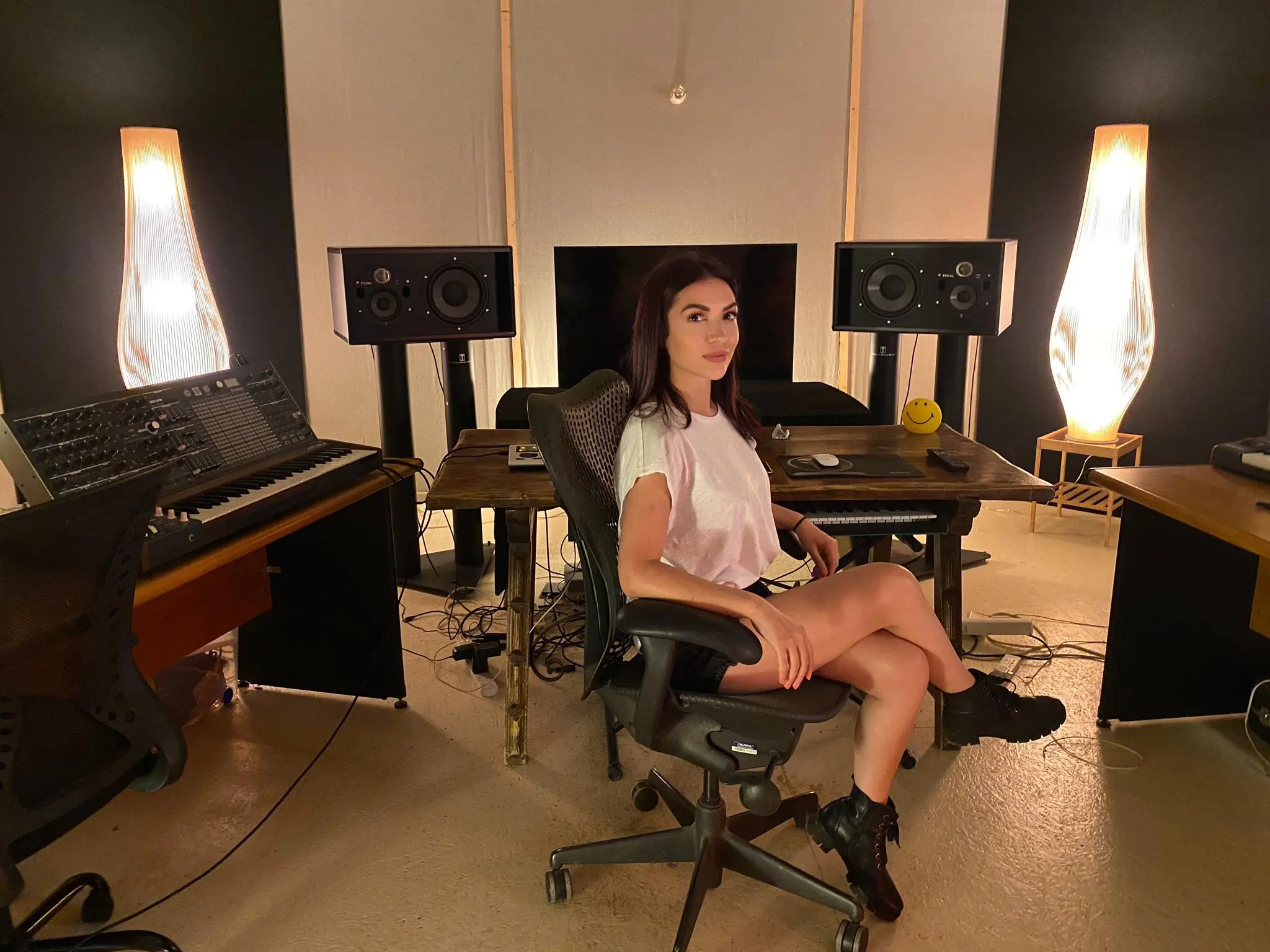
That background is still very present in the way I produce. I don’t see the voice simply as something that sits on top of an electronic track. I see it as another instrument. It can create tension, atmosphere, emotion and narrative.
That is especially clear in my new release, La Mélodie. The track begins with French operatic vocals and a very cinematic atmosphere before the electronic rhythm comes in and the production becomes much more intense and psychedelic.
I love that contrast between something elegant and almost fragile and something powerful and physical. For me, those aren’t contradictions. They are different parts of the same musical identity.
You have a new release, La Mélodie, coming out on April 18. Tell us about that!
La Mélodie is a very personal release because it brings together several sides of my musical identity that have existed separately for a long time.
The French vocal element connects to my background, while the production moves into a much more driving and psychedelic electronic territory. I wanted the beginning to feel almost cinematic, like opening a door into another world, before the rhythm takes over.
What I really like about the track is that the vocal is not just decoration. It carries part of the identity and emotion of the record. There is a tension between something beautiful and delicate and something much heavier underneath it.
In a way, La Mélodie represents where I am creatively right now. I am becoming less interested in fitting myself into one particular category and more interested in creating my own musical world.
As some of our readers and followers may have seen, you are just now launching a new techno and house collective called Raw District Amsterdam. Tell us about that, what your goals are for it, future plans, and your first events for it?
Raw District Amsterdam is something I have wanted to create because I see a need for a community that is genuinely focused on the music, the artists and the experience.
The idea is to create a space where techno and house can exist together without unnecessary boundaries, and where artists can develop their own identities rather than feeling pressured to fit into whatever is currently popular.
I want Raw District Amsterdam to be more than just another event series. I want it to become a community and a platform where DJs, producers and other creatives can connect, collaborate and support each other.
We are starting with events in Amsterdam and the goal is to gradually build something that can grow beyond individual parties. I want people to come to a Raw District event knowing that they are going to hear carefully selected music, discover artists they may not have heard before and be part of a real community.
How do you plan to use Raw District Amsterdam to help support female artists and DJs?
Supporting female artists is an important part of Raw District Amsterdam because I want to create opportunities rather than simply talk about representation.
There are so many talented female DJs and producers, and I want Raw District to provide a platform where their music can be heard and where they can be part of the community based on their talent and artistic identity.
That means booking female artists, giving emerging DJs opportunities to play alongside established artists and creating an environment where women feel comfortable developing their careers.
I also think support needs to go beyond simply putting women on a lineup. It is about creating genuine connections, sharing opportunities and helping artists build something sustainable.
What are your next upcoming releases and events you will be appearing at?
I have several things developing at the moment, both with my own music and with Raw District Amsterdam. La Mélodie is an important release for me because it represents the direction I am exploring creatively, and I am continuing to work on new material that brings together my electronic production with the more cinematic and vocal elements of my background.
With Raw District Amsterdam, we are also developing the first events and building the collective step by step. There is a lot happening behind the scenes, so I am excited about what is coming next and about introducing people to both the music and the artists involved.
In closing, is there anything you would like to say to our Electrofans audience?
I would say to keep listening with an open mind.
Electronic music is constantly changing, and I think that is one of the most exciting things about it. Don’t worry too much about labels. If something makes you feel something, that is what matters.
For me, music has always been about connection. Whether I am producing in the studio, playing a four hour set or building Raw District Amsterdam, the goal is ultimately the same: to create experiences that bring people together.
And I hope people will continue to follow the journey, because I feel like I am only getting started.
Cheers,
Sophia