CREATOR STORIES: Elegie

Our interview with San Francisco-based French producer, Elegie!
Hi Elegie, thanks for joining us today!
Thank you for having me, it is really nice to be here with Electrofans.
Thank you for having me, it is really nice to be here with Electrofans.
 |
 |
You have a very international background. Tell us about that, and how it has influenced your creative process.
Moving around is an experience that stays with you. Different countries, languages and ways of living all filter into how I hear music and how I write. I am very drawn to contrasts, and I think that comes from that experience. In the studio I am always trying to bring together things that do not obviously belong together and turn them into one emotional thread that feels honest to me.
Tell us about your background as both a DJ and producer.
I actually came to DJing through music production. From the beginning, production was a way to process and release difficult moments in my life, to take feelings I could not express in words and turn them into sound. I was so obsessed with expressing the music that was playing in my head, that did not exist yet, or pushing certain emotions further, that the only way was to start writing my own tracks. Now it has become a powerful creative loop. Time in the studio gives me material that feels very personal, and when I finally have the chance to play those tracks to a crowd, I can feel that weight shift into connection and shared release, which then feeds back into how I approach the next tracks.
As we are here at Electrofans, you are also based in San Francisco, right? How has San Francisco inspired you and influenced your creative journey as an artist and music producer?
Yes, I am. San Francisco is a place of many layers, very beautiful and deeply intense at the same time. There is the history of protest and counterculture, there is the reality you see in the streets every day, and there is the pressure of the tech world. All of that makes you think about how these different worlds exist side by side and how they shape people’s lives. Living here has definitely influenced the way I write and think about tension, contrast and the stories behind the music.
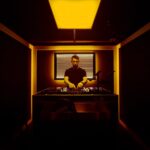
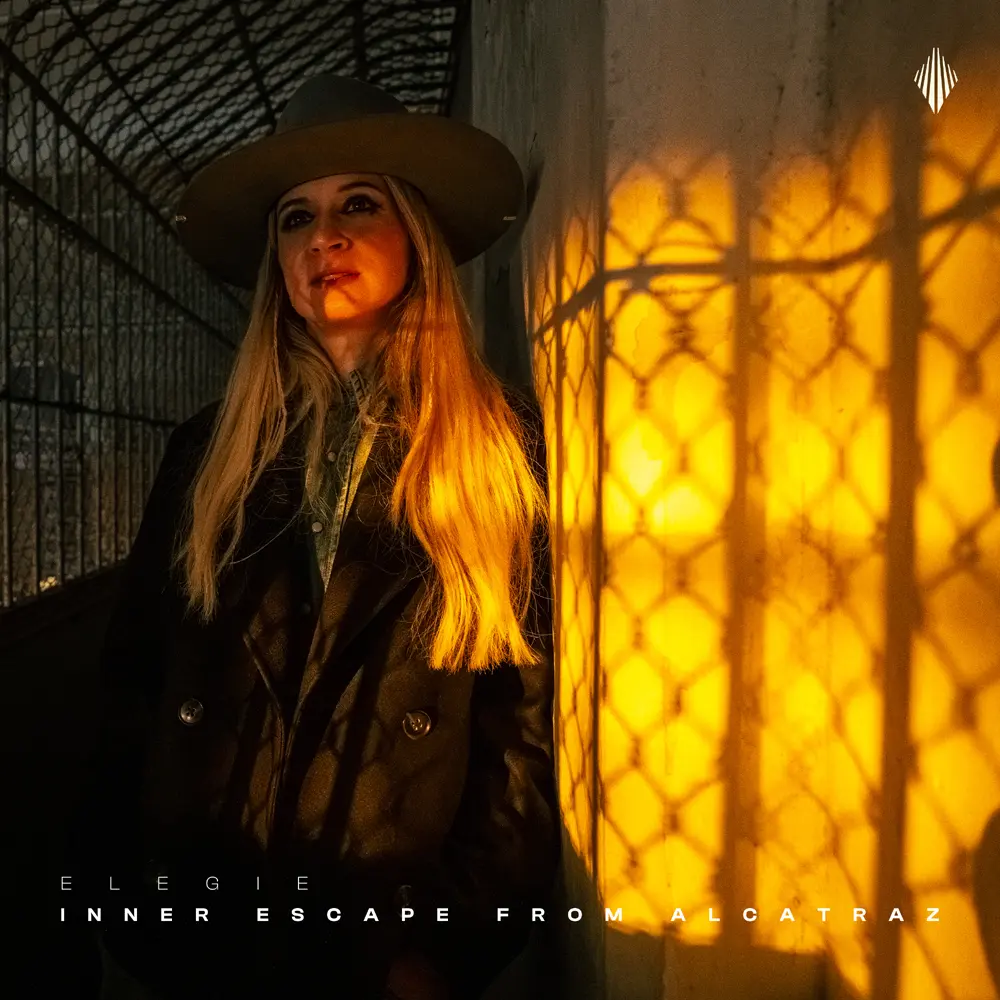
Just over a month ago, you did a special live DJ set, recorded at famed Alcatraz prison in San Francisco. Why did you want to do a live set there?
Alcatraz has always fascinated me since childhood, through Hollywood movies and especially Clint Eastwood, who was born in San Francisco and is my forever favorite actor and director – so when I moved to the city, it felt like a full circle moment, a bit surreal in a way. It is a heavy place, with a lot of history attached to it, but that also gives space to a lot of imagination and creativity. For me it represents confinement, but also the idea that sometimes the only escape left is the one that happens inside. I’m also really inspired by things that have never been done before, so the challenge of bringing music into that space definitely drove me forward. I wanted to see what happens when you play music that is about release and connection in a location that is the opposite, and let that tension shape the performance.
So apparently it took nearly a year to get permission to record there, due to restrictions. Tell us about that, and how you worked to overcome them.
Yes, it was not something you can organize overnight. There are strict rules for very good reasons. The island is protected by the National Park Service and there is a strong sense of responsibility around how it is used. I had to explain clearly what we wanted to do, why, and how we would respect the place. The long timeline was not only about restrictions, it was also the time needed to write the music, find the right people and bring together a team of very talented collaborators to shoot the video. I cannot speak highly enough about the Alcatraz team and their chief, they were incredibly supportive once they understood the intention. In the end I think what helped was that the idea was sincere. It was not about a quick stunt, it was about engaging with what Alcatraz stands for and treating it with care.
How did you go about putting together the tracks for this DJ set?
The music and track selection were all directly connected to the island. I started with my remix of “House of the Rising Sun,” chosen because of the French version “Le Pénitencier” by Johnny Hallyday, which makes the prison reference very clear from the first notes. From there, the core tracks of the Inner Escape from Alcatraz EP form the backbone of the set: “Jailer,” who they were, “Ghosts of The Rock,” who they become, and “Clint Westwood,” a nod to the “Escape from Alcatraz” movie and the idea of escape. Around those, I added tracks like “Beyond the Lookout,” which feels like standing at the watch points of the island, “The Edge,” which lives on that line between giving up and breaking free, “Starless,” which echoes the feeling of being cut off from the world, and “The Hanging Tree,” whose lyrics speak to holding on in very dark circumstances. There are also a lot of small easter eggs throughout the set if you know the history of Alcatraz, from the Native American occupation to the inmate prison band. Even though it’s music for the dancefloor, I treated the whole set as a single narrative that keeps circling back to what Alcatraz represents, and every track has either a direct or indirect connection to the island.
You did this live set in support of your latest EP, “Inner Escape from Alcatraz” (released on June 12). What has the reception been like so far for both the EP and the live set recorded there?
The reaction so far has been very positive, both on an audience level and in terms of numbers. Some messages have been quite personal, from listeners who felt seen by the idea of inner escape, pushing boundaries, pursuing your vision and making things happen, and a few have described the project as a bold move. The visual side and the history of the location helped people connect with the narrative and understand the storytelling and musical inspiration. It is easier to feel the tension and the release when you see and hear the island at the same time. On the numbers side, both “Jailer” and “Ghosts of The Rock,” the two new tracks from the EP, charted well on Beatport, with “Jailer” reaching top ten, and the video passed over forty-five thousand views a little over a month after release.
What is some of the press you have received for the new EP and DJ set?
What has meant the most to me is that the press did not only focus on the fact that it was recorded at Alcatraz, but on the intention behind it. They spoke about the way the music interacts with the space and the history, which is what I was hoping for. Of course, it is nice when people call it unique or special and describe it as a first in history, but I am happiest when they understand that there is a real story, an homage to the island, and a lot of intentional thought behind the concept.
Tell us about the co-promotion with 1001Tracklists. Why did you want to collaborate with them?
I have a lot of respect for what 1001Tracklists does for DJs and producers. It is a place where sets live in a very detailed way, with all the tracks and stories around them. They gave me a chance two years ago with my first self-produced set, “Above The Clouds,” at a time when I was really not known at all, so it felt natural to share this unique event and location with them again. I also learned recently that the person who handled that first collaboration was the same person who looked after this Alcatraz set, which felt very special. It feels like being invited back to play, and it made me feel that they truly want to support my work overtime, not just once.
How do you think someone who is both a DJ and producer can use live performances as a DJ to grow their producer career?
For me, that cannot be the primary goal. When I look at projects like “Above The Clouds” and “Inner Escape,” they go far beyond a live set performance. They are a way to write my own stories and express what I am going through storytelling. Elegy 1, “Above The Clouds,” was about seeing things from a different vantage point; Elegy 2, “Inner Escape,” is about finding freedom from the inside out; Elegy 3 will be about perspective, the idea that no one sees and experiences things in exactly the same way, and that a shift in viewpoint can change everything. Each of these projects touches on different themes that are important to me. Some of them have been described as bold or unexpected, which means they will not please everyone or follow an obvious path. If they end up growing my career, I will of course be extremely happy, but first and foremost they are about personal accomplishment and telling real stories.
At the same time, I do think live performances can support a producer career in a very concrete way: the more you perform, the more you understand the dancefloor, and that experience translates into your tracks. You learn how energy really moves in a room, where tension works, where you lose people, and what genuinely connects. That feedback loop can make your production stronger and more precise, but I believe it should come after the intention and the story, not replace them.
In closing, is there anything you would like to say to our Electrofans audience?
Thank you for listening and for being curious! Inner Escape from Alcatraz is a very personal journey for me, and I hope that some part of it speaks to your own experience, whether that is about confinement, change, or finding small moments of freedom and inspiration to execute your own artistic vision. I would love for you to spend time with the EP and the set, and to let me know how it resonates with you. That exchange is what keeps this whole thing alive.
FULL ARTIST BIO
Elegie is a French artist who has spent most of her life in the United States. She began producing music while living in New York City, working demanding corporate roles while channeling the melodies constantly playing in her mind into sound. Elegie holds a PhD in data science and has trained in physics, foundations that, combined with her passion for hardware and synthesizers, shape her distinctive artistic identity.
Her journey has taken her through techno hubs across Brazil, the United States, and Mexico. She has released on respected labels, reaching the Top 10 on Beatport’s Techno and Melodic House & Techno charts and consistently appearing in the Melodic Techno Top 100. Her work has been supported by leading platforms such as 1001Tracklists and recognized by Mixmag NL, DJ Mag ES, and DJ Mag Germany. She has also received support from globally renowned artists including Paul van Dyk, Massano, and Korolova, and her music has been featured on major radio platforms such as Insomniac Radio and Tomorrowland One World Radio.
Now based in the vibrant and eclectic city of San Francisco, Elegie continues to champion authenticity, originality, and emotion in every performance. From underground beginnings, she has gone on to perform at major venues across the city, including Audio and Halcyon, as well as landmark San Francisco venues such as SVN West and 620 Jones. She has shared the stage with artists such as Gareth Emery, Cristoph, YOTTO, Guy J, ANNA, 19:26, and KASIA. Beyond the club stage, her work extends into unique sonic and visual projects, including Above the Clouds, filmed at the Mill Valley Air Force Station, and Inner Escape, filmed inside the historic walls of Alcatraz prison in San Francisco.
Elegie dedicates her art to her late, beloved English bulldog, Edgy, and hopes to use future proceeds to support bulldog rescues and animal charities in celebration of their enduring bond.